

 Evelin RodriguezContent Manager at Zontex
Working with international clients creates opportunities to earn money from almost anywhere in the world. But once a project is completed and an invoice is ready, there is still one important step: getting paid.
For many freelancers and remote professionals, this means receiving a bank transfer from a client in another country. And sooner or later, that client will probably ask for an IBAN.
If you have never used one before, the term might sound technical. In reality, an IBAN is simply a standardized way to identify a bank account for payments. Understanding how it works can make receiving international payments much easier.
What exactly is an IBAN?
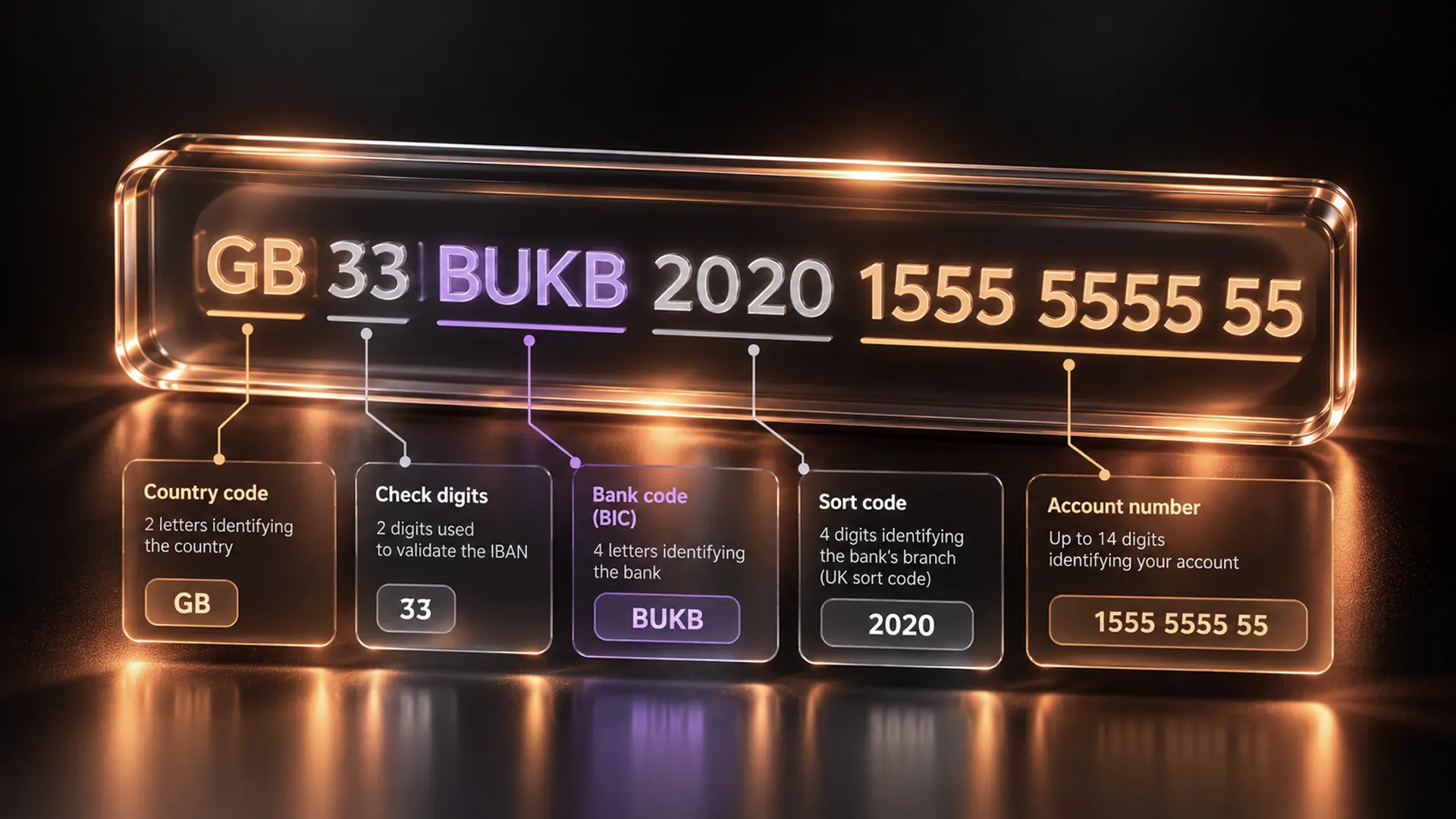
IBAN stands for International Bank Account Number. It is a standardized account identifier used by banks and payment providers to help process transfers accurately, particularly across borders.
An IBAN contains a combination of letters and numbers that identify the country, include check digits and specify the relevant account details. Its format varies depending on the country, and it can contain up to 34 characters.
For example, an IBAN might begin with DE for Germany, FR for France or LT for Lithuania. These letters indicate the country associated with the account identifier, while the remaining characters help identify the account.
IBANs are widely used across Europe and in many other countries. They are especially important for payments made through the Single Euro Payments Area (SEPA), which allows euro transfers between participating countries under a common set of payment standards.
Not every country uses IBANs, however. In the United States, for example, domestic bank transfers typically rely on account and routing numbers instead.
Why do international clients ask for an IBAN?
When a company hires a freelancer, its finance department usually follows an established payment process. The freelancer sends an invoice, the company verifies the payment details, and the finance team initiates a bank transfer.
For companies operating through traditional banking systems, an IBAN is often one of the details required to complete that payment.
Imagine you are a freelance designer working with a company in Germany. After completing a project, you send an invoice for €2,000. The company's finance department requests your account holder name and IBAN so it can process the payment through its banking system.
Once the transfer is initiated, the money travels through the relevant payment network and arrives in your receiving account, subject to the bank's processing times and any applicable checks.
This is one reason having access to an IBAN can be useful for freelancers. It allows clients who prefer traditional bank payments to pay through a familiar process without requiring them to use a cryptocurrency exchange, digital wallet or unfamiliar payment method.
How does an IBAN help freelancers working across borders?
Freelancers often work with several clients at the same time, and those clients may be based in different countries or use different payment systems.
A developer might work with a company in France, a marketing consultant might invoice clients in Germany, and a remote designer might receive payments from several European businesses throughout the month.
Without a suitable receiving account, managing these payments can become unnecessarily complicated. Some freelancers rely on multiple banking and payment applications, each with its own account details, supported currencies and withdrawal procedures.
An IBAN provides a standardized way to receive supported bank transfers. For clients who use IBAN-based payments, it makes the payment process more familiar and easier to integrate into their existing accounting procedures.
It can also simplify invoicing. Rather than discussing a new payment method for every project, you can provide the appropriate account details directly on your invoice.
However, having an IBAN does not automatically mean an account can receive every currency or accept payments from every country. Those capabilities depend on the financial institution, supported payment networks and account conditions.
What should you check before receiving a payment?
Before sharing your payment details with an international client, it is worth confirming a few practical things.
First, check which currencies your receiving account supports. Some accounts are designed primarily for euro payments, while others may offer additional currencies or international transfer options. If a client sends a currency that your account does not support, the transfer could be rejected or require conversion.
You should also verify the account holder name and any additional payment details required by the sender's bank. Depending on the payment route, the client may need information such as a BIC or SWIFT code, the recipient's address or other details.
Processing times and fees are another consideration. SEPA transfers in euros can often be completed within one business day, while eligible instant payments may arrive within seconds. Other international transfers can take longer, particularly when intermediary banks, currency conversions or additional compliance checks are involved.
Finally, make sure your account is permitted to receive the type of payment you expect. Some financial services have restrictions on business-related transfers, third-party payments or certain jurisdictions.
Checking these details before issuing an invoice can help avoid unnecessary payment delays.
Your personal IBAN with Zontex
Zontex is designed for people who manage different forms of money, including traditional currencies, stablecoins and cryptocurrencies.
After completing identity verification (KYC), eligible Zontex users can access a personal IBAN for supported fiat payments. This allows clients to send bank transfers through supported payment routes while the recipient manages the resulting balance within their Zontex account.
For example, imagine you work with two international clients. One pays you in EUR through a traditional bank transfer, while another prefers to send USDC through a blockchain network.
With Zontex, these payments can arrive through their respective financial systems and be managed within the same account. Your fiat balance can sit alongside supported stablecoins and cryptocurrencies, including BTC, ETH and SOL.
Instead of maintaining completely separate financial applications for traditional payments and digital assets, you have one place to view and manage your supported balances.
When you need another currency, Zontex also allows conversions between supported assets, displaying the exact exchange rate before you confirm the transaction. And with the virtual Visa Z-Card, the account is designed to connect your balances to everyday spending.
The goal is to make the experience more practical for people whose income and expenses already cross borders and financial systems.
One account for different ways of getting paid
International freelancing does not always fit into a single payment method. Some clients prefer traditional bank transfers, others use specialized payment services, and crypto-native companies may choose to pay in stablecoins or other digital assets.
An IBAN remains an important part of this picture because it gives freelancers a familiar way to receive supported bank payments from clients who operate through traditional financial infrastructure.
But receiving money is only the beginning. What matters just as much is being able to manage it once it arrives.
Zontex brings these different needs together by combining a personal IBAN, supported fiat currencies, stablecoins, crypto assets and everyday spending features within one account.
Whether a client pays through a bank or a supported blockchain network, the aim is to give you fewer financial platforms to manage and more flexibility in how you use your money.
Want a simpler way to manage international payments, fiat and crypto?
Join the waitlist at zontex.io to stay informed about the Zontex launch and availability in your country.